



KDM2
KDM2 (lysine demethylase 2) proteins, primarily KDM2A and KDM2B, are JmjC-domain histone demethylases that recognize unmethylated CpG islands through a conserved CXXC DNA-binding domain and regulate chromatin organization and transcriptional repression by targeting histone H3K36 methylation states[1]. Mechanistically, KDM2 proteins function at CpG island-associated promoters and integrate epigenetic control with transcriptional programs that influence cell identity, proliferation, and developmental gene regulation[1]. KDM2A additionally regulates signaling-associated transcriptional networks through interactions with non-histone substrates, whereas KDM2B is closely linked to Polycomb-associated gene silencing pathways, highlighting both shared and specialized regulatory functions within the family[1]. Disease relevance is supported by evidence connecting KDM2 dysregulation to developmental abnormalities, tumor progression, stem-cell-associated phenotypes, and altered cellular differentiation programs[2][3]. Compared with the canonical full-length isoforms, alternative short isoforms of KDM2A and KDM2B lack the N-terminal demethylase domain but retain DNA-binding and protein-interaction capacities, demonstrating that transcriptional regulation can occur independently of catalytic demethylase activity[1][2]. In experimental models, KDM2A-SF and KDM2B-SF repress canonical Wnt target genes, including AXIN2 and CCND1, and negatively regulate Wnt-responsive transcription through promoter binding and interaction with TCF7L1[2]. Therefore, the distinction between long and short KDM2 isoforms provides an important framework for mechanistic studies of epigenetic regulation and pathway-specific gene control in disease-relevant systems[1][2].
References:
- [1]. Huang Y, et al. The adjuvant treatment role of ω-3 fatty acids by regulating gut microbiota positively in the acne vulgaris. J Dermatolog Treat. 2024 Dec;35(1):2299107. [Content Brief]
- [2]. Lađinović D, et al. Alternative isoforms of KDM2A and KDM2B lysine demethylases negatively regulate canonical Wnt signaling. PLoS One. 2020 Oct 26;15(10):e0236612. [Content Brief]
- [3]. Liu L, et al. Histone demethylase KDM2A: Biological functions and clinical values (Review). Exp Ther Med. 2021 Jul;22(1):723. [Content Brief]
All Product Categories
-
KDM2 Related Products (6)
Related Products (6)

-
IOX1
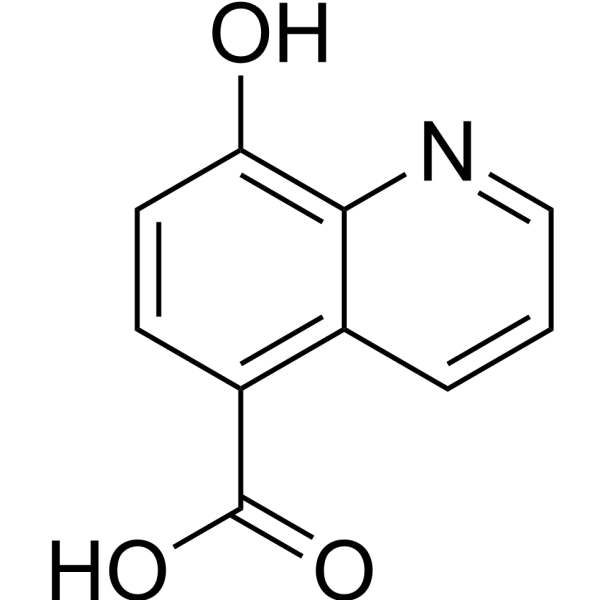 0 ImagesIOX1, a chemical probe, is a potent broad‐spectrum inhibitor of 2OG oxygenases, including the JmjC demethylases. IOX1 inhibits KDM4C, KDM4E, KDM2A, KDM3A and KDM6B with IC50 values of 0.6 μM, 2.3 μM, 1.8 μM, 0.1 μM and 1.4 μM, respectively. IOX1 also inhibits ALKBH5.
-
Daminozide
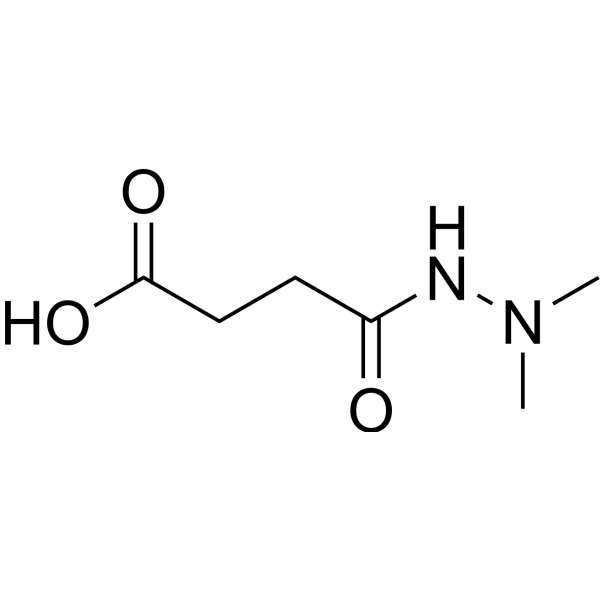 0 ImagesDaminozide, a plant growth regulator, is a selective inhibitor of the human KDM2/7 histone demethylases, with IC50s of 0.55, 1.5 and 2.1 μM for PHF8, KDM2A, and KIAA1718, respectively. Daminozide has >100-fold selectivity for KDM2/7 subfamily versus other demethylase subfamily members tested.
-
KDM2/7-IN-1
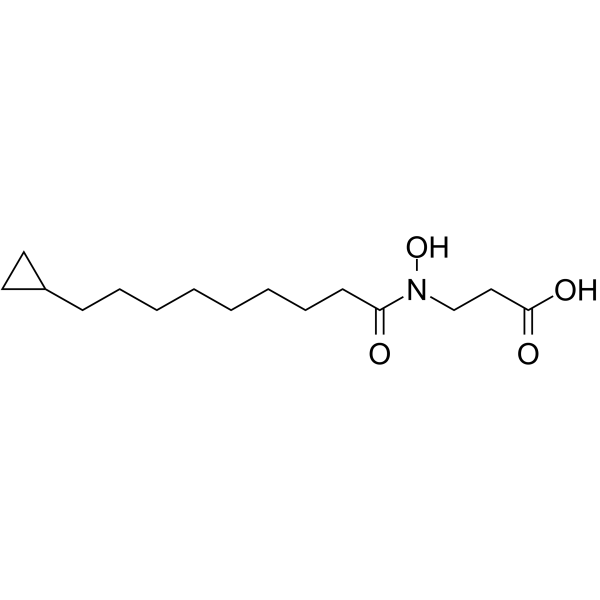 0 ImagesKDM2/7-IN-1 (TC-E 5002) is a selective histone demethylase KDM2/7 subfamily inhibitor (IC50 values are 0.2, 1.2, 6.8, 55, 83, >100 and >120 μM for KDM7A, KDM7B, KDM2A, KDM5A, KDM4C, KDM6A and KDM4A respectively). KDM2/7-IN-1 inhibits growth of HeLa and KYSE-150 cancer cells in vitro.
-
KDM2A/7A-IN-1
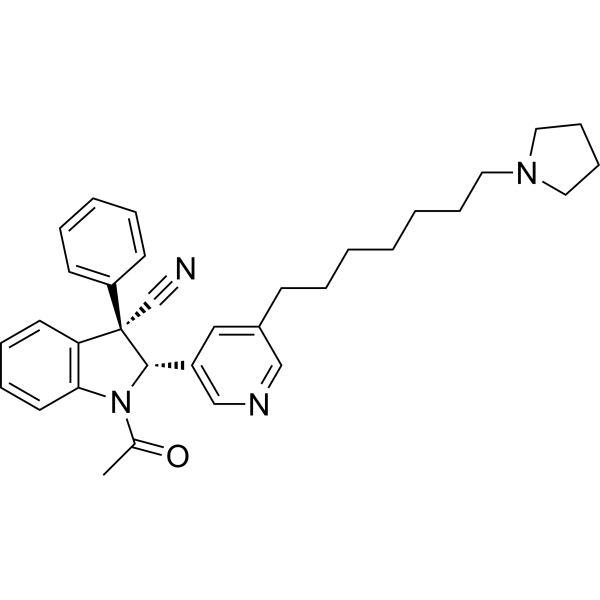 0 ImagesKDM2A/7A-IN-1 is a first-in-class, selective and cell-permeable inhibitor of histone lysine demethylases KDM2A/7A, with an IC50 of 0.16 μM for KDM2A, exhibits 75 fold selevtivity over other JmjC lysine demethylases, and is inactive on methyl transferases, and histone acetyl transferases.
-
KDM2B-IN-4
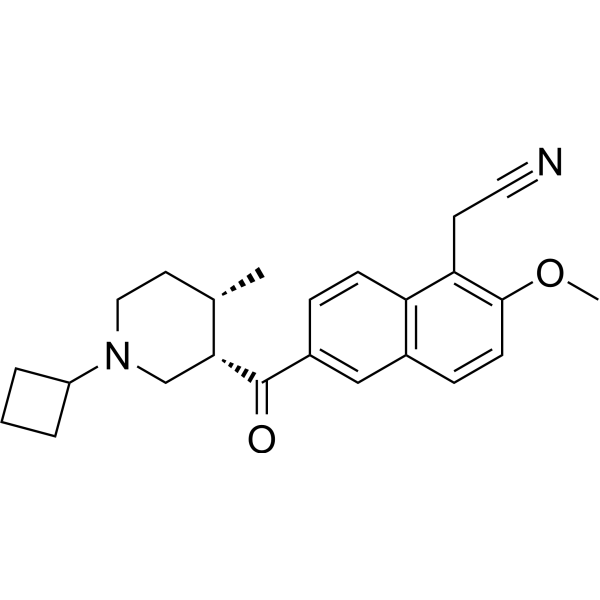 0 ImagesKDM2B-IN-4 (Compound 182b) is a histone demethylase KDM2B inhibitor with an IC50 of 1.12 nM. KDM2B-IN-4 can be used for the research of hyperproliferative diseases such as cancers.
-
DW-229
 0 ImagesCat. No.: HY-183618DW-229 is a PROTAC degrader derived from Deferiprone (HY-B0568), targeting Fe(II)/α‑ketoglutarate‑dependent histone lysine demethylases (KDMs). DW-229 degrades KDM2A, KDM3A, KDM5B, KDM4A‑C, KDM5C, KDM6B in breast cancer cells. DW-229 shows IC50 < 0.5 μM against MCF‑7 cells and IC50 of 8.87 μM against MDA‑MB‑231 cells, with high cancer cell selectivity. DW-229 can be used for the research of breast cancer, liver cancer, prostate cancer, lung cancer.



